
 by
by 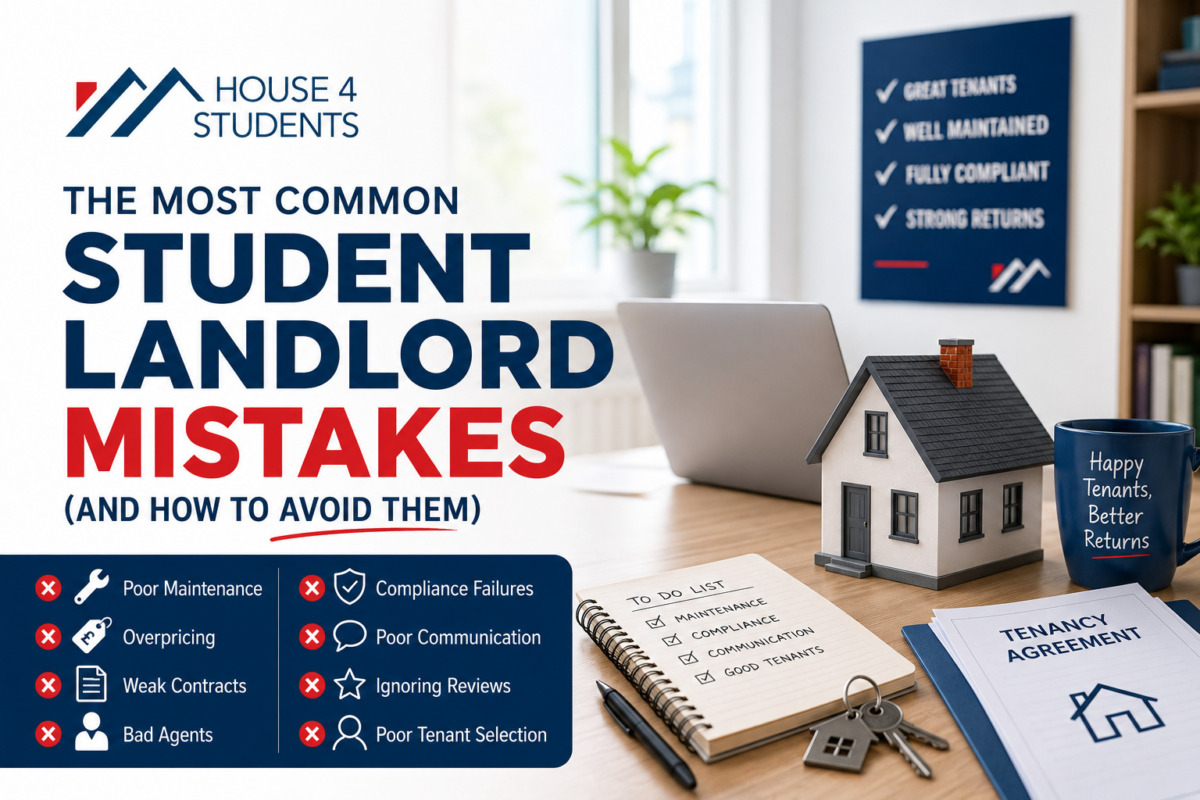
Student property can provide reliable demand and attractive rental income. However, successful student letting involves much more than owning a house near a university.
Small management problems can quickly become expensive. A delayed repair may cause further damage. An unrealistic rent can create a summer void. Meanwhile, weak paperwork can turn a straightforward disagreement into a lengthy dispute.
Many of the most common student landlord mistakes are preventable. The key is to identify problems early and build reliable processes around maintenance, pricing, compliance and communication.
Here are eight mistakes student landlords regularly make, along with practical ways to avoid them.
1. Delaying Property Maintenance
Poor maintenance is one of the quickest ways to damage a landlord’s reputation.
Student houses experience significant daily use. Several occupants may share the kitchen, bathrooms, heating, appliances and communal areas. Therefore, minor defects can worsen quickly.
For example, a tenant reports that water is escaping from the shower tray. The landlord decides to wait until the next planned inspection. Two weeks later, the leak has damaged the flooring and the ceiling below.
A relatively inexpensive sealant repair has now become a much larger job.
Delayed maintenance can also:
- Create damp and mould
- Increase repair costs
- Cause complaints
- Encourage negative reviews
- Damage the landlord-tenant relationship
- Affect future tenant demand
How to Avoid This Mistake
Give tenants one clear method for reporting repairs. Ask them to include photographs, the location of the problem and whether it is getting worse.
Next, separate maintenance into three categories:
- Emergencies requiring immediate action
- Urgent repairs requiring a prompt visit
- Routine work that can be scheduled
Keep a written record of every report, response and completed repair.
Landlords preparing properties between academic years can follow the Student House Summer Preparation Checklist for cleaning, repairs, damp prevention, heating checks and documentation.
2. Overpricing the Property
Every landlord wants to achieve a strong rent. However, setting the rent above the local market can be costly.
Students normally compare several houses at once. They consider the weekly or monthly rent alongside location, room sizes, furnishings, broadband, bills and overall condition.
Imagine two similar four-bedroom houses near the same university.
The first house is clean, modern and priced in line with comparable properties. The second has older furniture and is priced £20 per person per week higher.
Even if the second landlord is willing to negotiate later, most student groups may reject it before arranging a viewing.
The landlord could then lose several weeks of marketing time and eventually reduce the rent anyway.
How to Avoid This Mistake
Before advertising, compare your property with genuinely similar student houses.
Check:
- Distance from the university
- Number and size of bedrooms
- Bathroom provision
- Property condition
- Bills included or excluded
- Broadband speed
- Furnishings and appliances
- Garden, parking and security
- Current local availability
Do not base the rent only on what another landlord achieved last year. Market conditions, competing stock and student expectations can change.
Pricing should also reflect the whole package. A well-maintained house with strong Wi-Fi and responsive management may justify a premium. However, the difference must be clear to prospective tenants.
Read Why Some Student Houses Let in 48 Hours and Others Sit Empty for more guidance on pricing, timing and presentation.
3. Using Weak or Outdated Tenancy Agreements
A tenancy agreement should clearly explain the arrangement between the landlord and tenants.
Problems arise when landlords reuse an old template without checking whether it remains suitable or legally compliant.
Weak agreements may be unclear about:
- Rent payment dates
- Responsibility for utility bills
- Joint tenant responsibilities
- Guarantor arrangements
- Garden maintenance
- Cleaning shared spaces
- Reporting repairs
- Replacement tenants
- Property access
- Damage to communal areas
For example, a group leaves the garden badly overgrown at the end of the tenancy. The landlord believes garden maintenance was the tenants’ responsibility. However, the agreement does not clearly say this.
That lack of clarity makes a dispute much harder to resolve.
Private renting rules in England changed significantly on 1 May 2026. Most private tenancies are now assured periodic tenancies, and Section 21 has been abolished. Landlords should review the latest government guidance on private renting changes rather than relying on older tenancy documents.
How to Avoid This Mistake
Use a professionally prepared agreement that reflects:
- Current legislation
- The property type
- The student letting arrangement
- Any guarantor requirements
- Whether bills are included
- How joint responsibilities are handled
Do not copy a free agreement from an unknown website and assume it will protect you.
Provide the agreement early enough for tenants and guarantors to read it properly. Clear paperwork prevents misunderstandings before they begin.
4. Choosing the Wrong Letting Agent
A poor letting agent can create more work rather than less.
Some landlords choose an agent based mainly on the cheapest management fee. However, a low fee offers little value if the agent responds slowly, markets the property poorly or fails to manage compliance correctly.
For example, an agent takes several days to respond to new enquiries. By the time they arrange a viewing, the student group has already reserved another house.
Another agent may find tenants quickly but provide weak referencing, incomplete inventories or poor maintenance coordination.
How to Avoid This Mistake
Before appointing an agent, ask:
- How many student properties do you manage?
- Which university areas do you understand?
- When do you begin marketing for the next academic year?
- How quickly do you answer enquiries?
- Who handles emergency maintenance?
- How are tenants and guarantors referenced?
- Who protects deposits and serves required information?
- How often will I receive updates?
- Which redress scheme do you belong to?
- Do you hold client money protection?
Letting agents and property managers in England or Wales must belong to an approved redress scheme. Landlords can review the GOV.UK guidance on property agent redress schemes.
You should also read Should You Self-Manage or Use a Letting Agent for Student Properties? before deciding which option fits your time, experience and portfolio.
5. Treating Compliance as a One-Off Task
Compliance failures are among the most serious student landlord mistakes.
A landlord may have completed every required check when first purchasing the property. However, certificates expire, local licensing schemes change and new tenancy rules take effect.
Important responsibilities may include:
- Annual gas safety checks
- Electrical installation inspections
- Energy Performance Certificates
- Smoke and carbon monoxide alarms
- Deposit protection
- Right to Rent checks
- HMO licensing
- Local authority licence conditions
- Furniture and fire safety requirements
- Providing required tenancy information
Under current electrical safety rules, rented properties must generally have their electrical installations inspected at least every five years by a suitably qualified person. See the government electrical safety guidance.
Gas appliances and flues supplied by the landlord also require regular checks. The Health and Safety Executive’s landlord gas safety guidance explains the relevant duties.
HMO Licensing
A property may be an HMO when at least three tenants from more than one household share facilities.
An HMO occupied by five or more people normally requires a mandatory licence. Councils may also operate additional licensing schemes covering smaller HMOs.
Therefore, landlords should check the GOV.UK HMO guidance and contact the local council before letting the property.
Deposit Protection
Where deposit protection rules apply, the deposit must be placed in an approved scheme within the required timeframe. The landlord or agent must also provide the necessary information.
Current requirements are available through the GOV.UK tenancy deposit protection guidance.
How to Avoid This Mistake
Create a compliance calendar containing:
- Certificate expiry dates
- Licence renewal dates
- Inspection deadlines
- Deposit deadlines
- Planned alarm tests
- Tenancy document deadlines
- Changes introduced by new legislation
Store certificates and evidence in one secure digital folder. Set reminders several weeks before each deadline.
Most importantly, remember that appointing an agent does not mean you should ignore compliance. Confirm in writing who is responsible for every task.
6. Communicating Poorly with Tenants
Many disputes begin with poor communication rather than deliberate misconduct.
Common communication problems include:
- Not acknowledging repair reports
- Giving vague arrival times
- Entering without proper notice
- Failing to explain bill responsibilities
- Sending different instructions to different housemates
- Ignoring emails during busy periods
- Making verbal promises without recording them
For example, a tenant reports a broken washing machine. The landlord contacts a contractor but does not reply to the tenant.
From the landlord’s perspective, the problem is being handled. From the tenant’s perspective, the landlord has ignored the message.
A simple acknowledgement could prevent frustration.
How to Avoid This Mistake
Acknowledge every important message, even when you do not yet have a complete answer.
For instance:
“Thank you for reporting this. I have contacted the contractor and will update you by tomorrow afternoon.”
Set realistic expectations rather than promising an immediate repair that may not be possible.
It also helps to provide a welcome guide covering:
- Maintenance reporting
- Emergency contacts
- Bin collection
- Heating controls
- Condensation prevention
- Wi-Fi details
- Garden responsibilities
- Rent and bill arrangements
- Property access procedures
Keep important communication in writing and use one main contact for the household where appropriate.
7. Ignoring Tenant Reviews and Feedback
Reviews influence how future students and parents view a property or agent.
A negative review does not automatically mean the landlord is unreasonable. However, repeated comments about the same issue should not be dismissed.
For example, several former tenants mention slow repairs and poor communication. The landlord considers the reviews unfair and continues using the same maintenance process.
As a result, the same complaints appear the following year.
Reviews can reveal weaknesses in:
- Check-in procedures
- Cleaning standards
- Maintenance response times
- Deposit communication
- Agent performance
- Property descriptions
- Furnishings
- Broadband reliability
How to Avoid This Mistake
Review feedback objectively.
Look for patterns rather than focusing only on the wording of one complaint. Ask:
- Has this issue been raised before?
- Could expectations have been clearer?
- Was the problem acknowledged promptly?
- Is there evidence that action was taken?
- Does a process need to change?
Respond to public criticism calmly and professionally. Avoid arguing with former tenants online or sharing private tenancy information.
A useful response acknowledges the concern, briefly explains that it has been reviewed and invites direct contact where appropriate.
Positive reviews are also valuable. They show what tenants appreciate and what should be maintained.
You can find more landlord and student property guidance on the House4Students blog.
8. Rushing Tenant Selection
Filling an empty property quickly can feel like the priority. However, accepting the first group without a consistent assessment process can create problems later.
Warning signs may include:
- Incomplete application information
- Conflicting details from group members
- Unclear affordability
- Missing guarantor paperwork
- Reluctance to read the agreement
- Poor communication before signing
- Disagreement within the group
- Unrealistic expectations about the property
This does not mean landlords should search through applicants’ private lives or make assumptions based on appearance, background or social media.
Instead, tenant selection should be fair, proportionate and consistent.
Example
A group says that all four students want the property. However, only two complete the application forms. One has not viewed the house, while another is unsure whether they will remain at the university.
Accepting the group immediately could lead to withdrawals, replacement-tenant requests or payment problems.
Taking time to confirm the whole group’s position would reduce that risk.
How to Avoid This Mistake
Use the same written criteria for every applicant.
Depending on the circumstances, checks may include:
- Identity verification
- Right to Rent checks
- Proof of student status
- Affordability information
- Guarantor documents
- Previous accommodation references
- Confirmation from every group member
- Agreement about bills and tenancy responsibilities
Keep the process relevant and avoid collecting unnecessary personal data.
Our guide to choosing better student tenants explains how to assess applicants without becoming intrusive or inconsistent.
A Simple Student Landlord Mistakes Checklist
Before every new tenancy, ask:
- Are all repairs complete?
- Is the rent supported by current comparable properties?
- Is the tenancy agreement current and suitable?
- Is the agent performing to an agreed standard?
- Are all certificates and licences valid?
- Has the deposit process been confirmed?
- Do tenants know how to report problems?
- Have previous reviews been considered?
- Has every applicant been assessed consistently?
- Are promises and responsibilities recorded in writing?
If any answer is unclear, deal with it before handing over the keys.
Final Thoughts on Avoiding Student Landlord Mistakes
The most successful student landlords are not necessarily those with the most expensive properties.
They are often the landlords who manage the fundamentals consistently.
They maintain the house, price it realistically, use clear agreements, monitor their agent, meet compliance deadlines and communicate professionally.
They also listen to feedback and select tenants through a fair, organised process.
Avoiding common student landlord mistakes protects more than rental income. It reduces stress, improves tenant relationships and helps the property develop a stronger long-term reputation.
For more student accommodation advice, market updates and landlord guidance, visit House4Students UK or explore the House4Students blog.
This article provides general information for landlords in England and should not be treated as legal advice. Rules may differ in Scotland, Wales and Northern Ireland. Landlords should check current government and local authority guidance.
Frequently Asked Questions
What is the most common mistake made by student landlords?
Poor communication is one of the most common problems because it affects maintenance, rent, access, bills and end-of-tenancy arrangements. A clear written process can prevent many disputes.
Can a student landlord rely entirely on a letting agent?
An agent can manage many day-to-day responsibilities, but the landlord should still monitor performance and confirm who is responsible for compliance, deposits, repairs and documentation.
How quickly should student property repairs be completed?
The response should reflect the seriousness of the problem. Emergencies require immediate attention, while routine repairs can be scheduled. Every report should be acknowledged and recorded.
How can a landlord avoid overpricing a student house?
Compare the property with similar homes in the same area. Consider location, condition, room sizes, bills, broadband, facilities and current competition rather than relying only on last year’s rent.
Does every student HMO need a licence?
Not necessarily. Mandatory licensing generally applies to HMOs occupied by five or more people, although councils may license smaller HMOs through additional schemes. Always check with the local authority.
External References
- GOV.UK – Landlord Responsibilities
- GOV.UK – Private Renting Changes for Landlords
- GOV.UK – Houses in Multiple Occupation
- GOV.UK – Tenancy Deposit Protection
- GOV.UK – Electrical Safety Standards
- Health and Safety Executive – Landlord Gas Safety
- GOV.UK – Property Agent Redress Schemes
- NRLA – Student Tenancy Guidance


Join The Discussion