
 by House4Students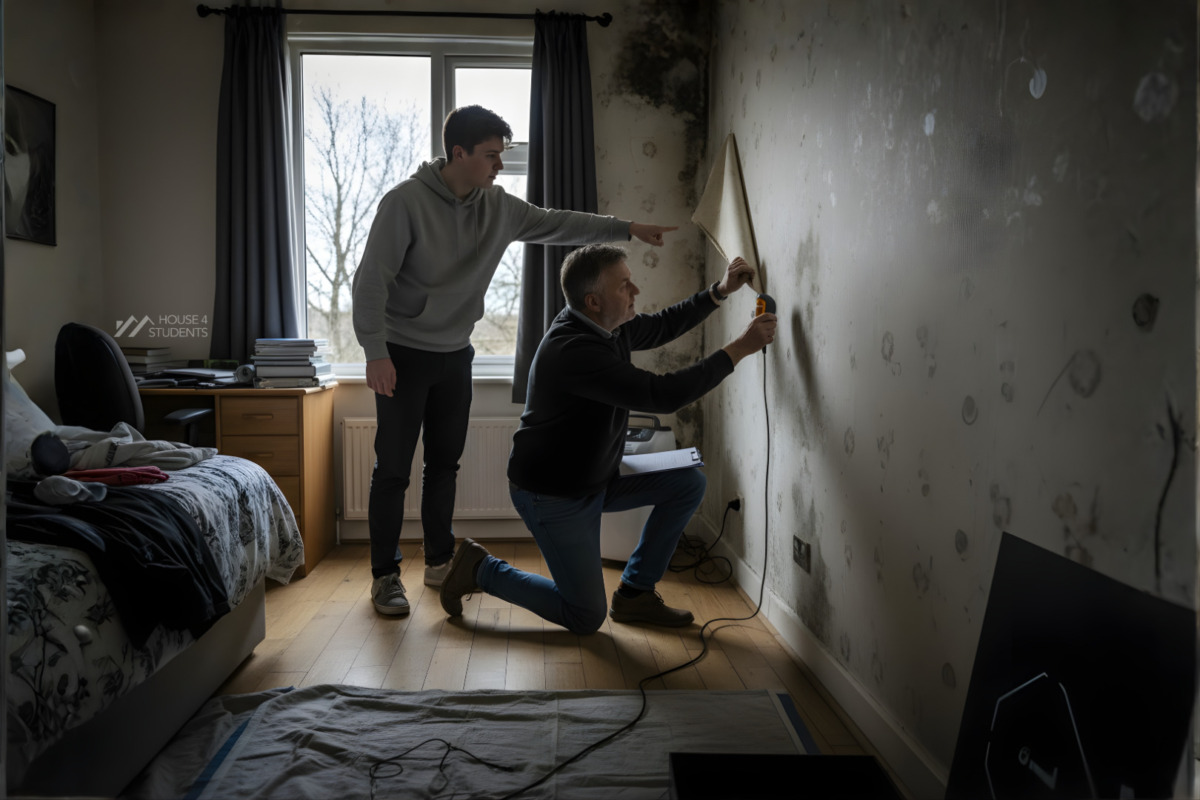
Damp is one of the most common — and most misunderstood — issues in student housing. As winter sets in, landlords should be proactive in spotting, preventing and educating tenants about damp before it becomes a serious (and costly) problem.
Here’s how to deal with it properly.
1. What Causes Damp in Student HMOs?
Most landlords think of damp as a leak issue — but in reality, it’s often caused by condensation, not structural problems. Especially in student properties, where:
- Large groups create more moisture from cooking, washing, and breathing
- Clothes are dried indoors on radiators without proper ventilation
- Shower steam and wet towels aren’t aired out
- Windows stay shut for heat retention, especially in winter
The result? Moist air condenses on cold external walls — particularly in corners, behind beds, and wardrobes. That’s where mould forms first.
Telltale signs:
- Mould patches on external walls, not ceilings
- Condensation on windows in the morning
- Musty smells in wardrobes or corners
- Black spots behind furniture
2. How to Fix It — The Right Way
You can’t fix damp with bleach alone. The key is reducing airborne moisture and improving ventilation:
- Encourage tenants to open windows regularly, even in winter — 10 minutes a day can make a big difference
- Provide dehumidifiers — they help dry out the air and prevent mould build-up
- Check extractor fans in kitchens and bathrooms are working (and actually being used)
- Move furniture slightly away from external walls to allow airflow
- Use mould-resistant paint on walls prone to condensation
Bonus: dehumidifiers don’t just prevent mould — they also make the property more efficient to heat, because dry air warms faster. They also give off a small amount of heat as they run as the air dries.
3. Pro Tips for Prevention
Damp prevention isn’t just about the property — it’s about tenant education too.
- Include a “moisture management” guide in your welcome pack or tenancy agreement
- Explain why condensation happens and how to reduce it
- Add a clause requiring tenants to use extractor fans and open windows periodically
- Provide clear instructions for dehumidifier use
- Inspect problem zones mid-tenancy (e.g. winter checks)
And of course, check for the obvious too:
- Leaking guttering or roofing
- Rising damp at ground level
- Blocked air bricks or vents
Final Word
Damp isn’t always a maintenance failure — but if you ignore it, it will become one. Most student properties are at risk simply because of how they’re used.
Don’t wait for mould to appear — educate, ventilate, and dehumidify. Prevention is cheaper than plasterboard.