
 by House4Students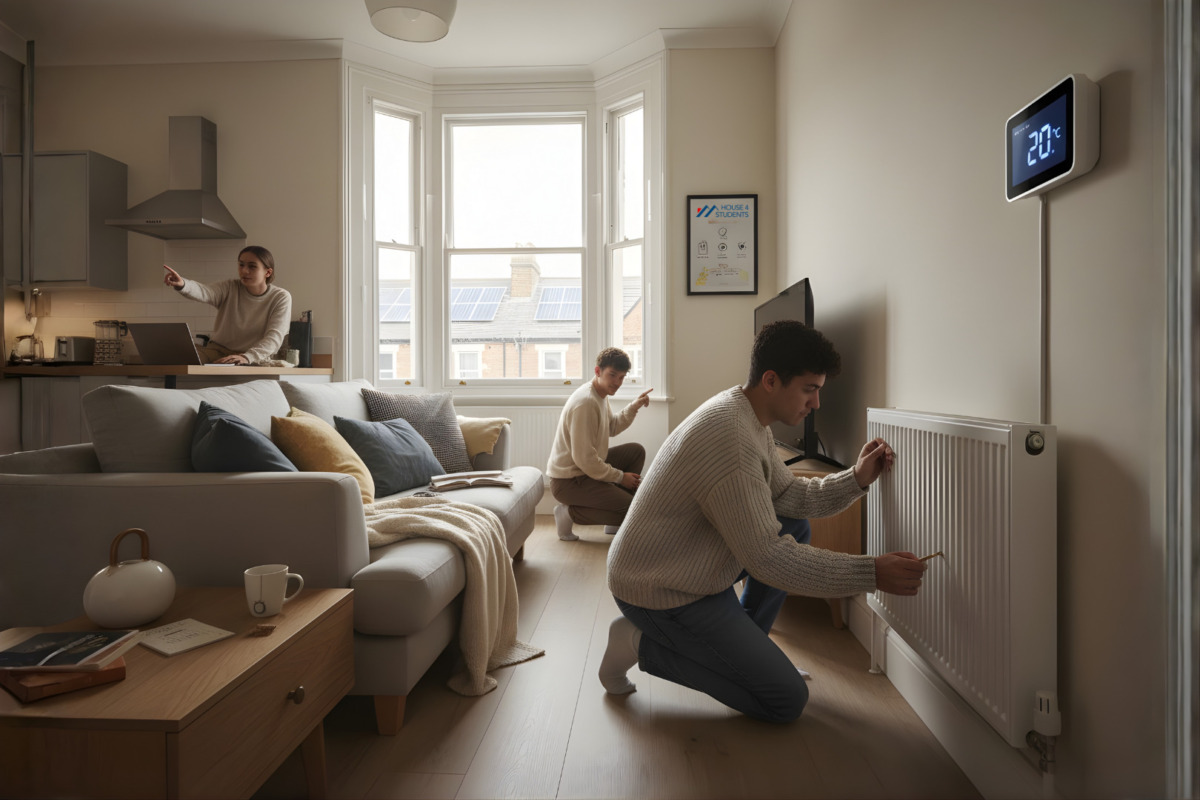
Winter is coming — and for student landlords, that means two things: rising energy usage and rising complaints. Whether you offer all-inclusive rents or leave bills to your tenants, poor heating management can lead to mould, frostiness (literally and metaphorically), and damage to your margins.
Here’s how to run a warm, energy-efficient student house in 2025.
1. Heating Strategies That Work in Shared Houses
Heating a student HMO isn’t just about installing a boiler and hoping for the best. You need systems that balance comfort and cost:
- Set radiator thermostats correctly — not every room needs to be a sauna
- Use a smart thermostat (e.g. Hive, Nest, Tado) that lets you track usage and set zones
- Programme heating schedules to match likely student hours (e.g. mornings and evenings)
- Bleed radiators before winter to ensure maximum efficiency
Also check:
- Boiler pressure and servicing — a struggling boiler is inefficient
- Windows and doors — draught-proofing can cut bills by 10–15%
2. How to Prevent Energy Waste (and Arguments)
Whether bills are included or not, overuse can cause conflict:
- Set clear expectations at check-in — include a “heating guide” in your welcome pack
- If you include bills, use a usage cap (e.g. £18–£22 pp/pw) with transparent overage terms
- Provide thermostatic radiator valves so tenants can self-manage room heat
- Encourage good habits: doors closed, no windows open with heating on, layers before radiators
Tip: Students often run heating all day “just in case”. A clear, automated system with set times avoids this without confrontation.
3. Upgrades That Pay for Themselves
The biggest savings often come from small changes:
- Install a dehumidifier — reduces mould and dries air, making rooms easier to heat
- Use reflective radiator panels on external walls
- Fit heavy curtains or thermal blinds
- Upgrade insulation — loft insulation and draught seals are cost-effective
And remember, dehumidifiers generate some heat too — not because the unit runs hot, but because the act of removing moisture from the air releases latent heat. As damp air condenses inside the unit, that energy is released into the room — making the space feel warmer while drying it out. Win-win.
If you’re planning a refurb in 2026, invest in:
- Modern condensing boilers
- Zoned heating systems
- EPC upgrades (especially if new EPC rules are introduced mid-decade)
Final Word
Keeping a student property warm without wasting money is a balance — but one that starts with planning, not panic.
Educate your tenants, use smart systems, and don’t wait until someone complains about a “freezing bedroom”.
The best landlords lead from the thermostat.